Incident Response Report: Maranhão — Trojanized Game Mod to Node.js Infostealer
Platform: CyberDefenders
Challenge: Maranhao
Category: Endpoint Forensics
Difficulty: Easy
Tools: DB Browser for SQLite, PECmd, EvtxECmd, Timeline Explorer, Registry Explorer, FTK Imager
Achievement: Proof of Completion
1. Executive Summary
Incident Type: Supply Chain via Trojanized Game Mod / Infostealer / Credential Theft
Affected Host: DESKTOP-HH58NQV — Employee: Levi
On September 17, 2025, an endpoint belonging to employee Levi was compromised after downloading a trojanized game mod archive (Fnafdoomlauncherd.7z) from Google Drive. The malware used a silent Inno Setup installer to deploy a Node.js-based infostealer (updater.exe) into a hidden AppData directory. The malware established registry-based persistence, performed extensive WMIC system fingerprinting, force-killed Microsoft Edge to steal stored credentials via a named IPC pipe, queried a geolocation API, and beaconed to a Cloudflare-proxied C2 domain (api.maranhaogang.fun).
Indicators of Compromise (IOCs)
| Type | Indicator | Description |
|---|---|---|
| Delivery URL | https://drive.usercontent.google.com/uc?id=1mIxhfZXmcUT2mbKNuahsRI4S_rzVUFKW&export=download | Google Drive hosting malicious archive |
| Download Time | 2025-09-17 10:10 UTC | Initial compromise timestamp |
| Initial Executable | Fnafdoomlauncher.exe | Trojanized game mod launcher |
| Dropper SHA-1 | FCB94C06FA80CE277B47E545B3805AB38BB6ACF4 | Hash of the installer executable |
| Stage 2 Binary | updater.exe | Node.js infostealer masquerading as Windows Updater |
| Stage 2 SHA-1 | 28E961FB9BE4AD42BB0D1024E0108585B55912DF | Hash of Node.js payload |
| Stage 2 Path | C:\Users\Levi\AppData\Local\Programs\Microsoft Updater\ | Hidden staging directory |
| C2 UUID Argument | e90de8b2-eb79-4614-94f8-308f0f81573b | Unique C2 identifier passed as argument |
| Persistence Key | HKCU\SOFTWARE\Microsoft\Windows\CurrentVersion\Run | Registry autostart entry |
| Persistence Timestamp | 2025-09-17 10:13:27 UTC | 3 minutes after initial execution |
| Named Pipe | \ChromeDecryptIPC_e7e223c5-50d5-40ae-8513-64c9962789c2 | In-memory credential transfer channel |
| C2 Domain | api.maranhaogang.fun | Cloudflare-proxied C2 |
| C2 IPs | 172.67.144.96, 104.21.71.100 | Cloudflare edge nodes |
| Geolocation API | ip-api.com (IP: 208.95.112.1) | Victim location profiling |
MITRE ATT&CK Mapping Overview
| Tactic | Technique | ID |
|---|---|---|
| Initial Access | Supply Chain — Trojanized Software | T1195.002 |
| Execution | Installer Silent Flag (/VERYSILENT) | T1059 |
| Defense Evasion | Masquerading — updater.exe as Windows Updater | T1036.005 |
| Defense Evasion | Hidden Files — attrib +h +s | T1564.001 |
| Persistence | Registry Run Key | T1547.001 |
| Discovery | System Information Discovery via WMIC | T1082 |
| Credential Access | Browser Credential Theft — SQLite DB | T1555.003 |
| Collection | Named Pipe IPC — ChromeDecryptIPC | T1559.001 |
| Command & Control | DNS over Cloudflare Proxy | T1090.002 |
2. Phase 1: Initial Access — Trojanized Game Download (Questions 1–3)
Objective: Identify the delivery URL, download timestamp, and the name of the initial malicious executable.
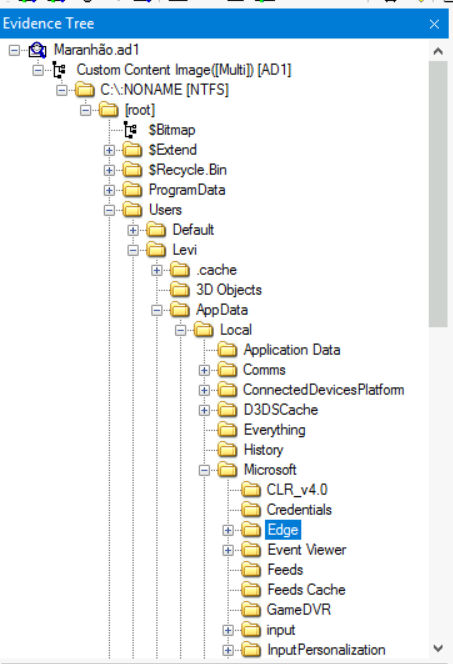
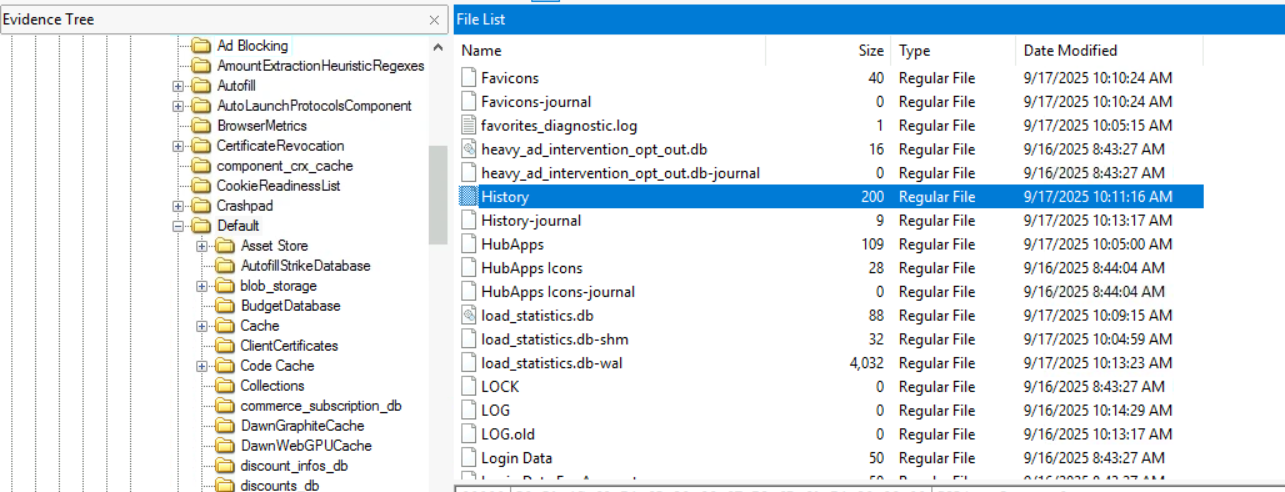
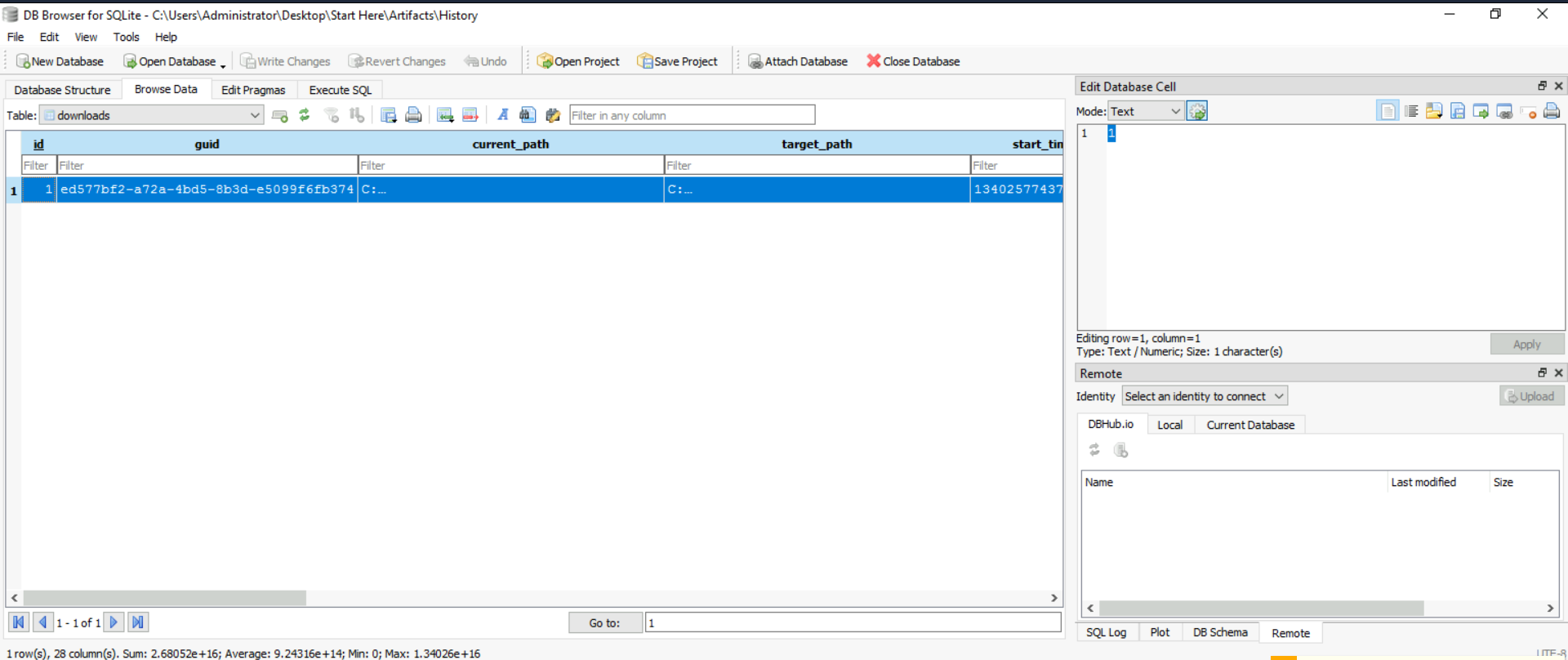
The forensic image (Maranhão.ad1) contains Levi’s Microsoft Edge browser profile. The History SQLite database within the profile’s Default directory stores a complete log of downloads. Using DB Browser for SQLite, we query the downloads table:
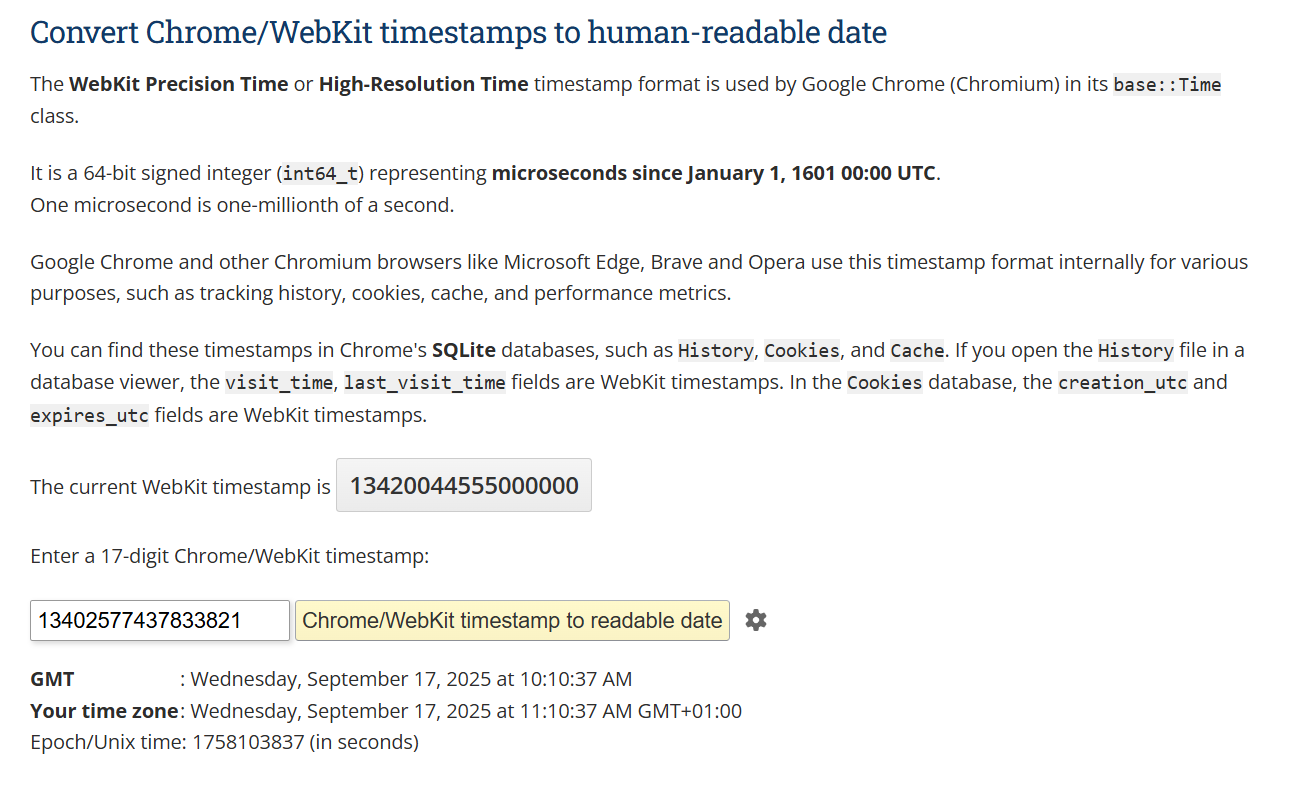
The malware was hosted on Google Drive — a deliberate choice to abuse a trusted cloud platform and bypass URL reputation filtering. The start_time column contains a WebKit timestamp (microseconds since January 1, 1601) that, when converted to UTC, yields the precise download time.
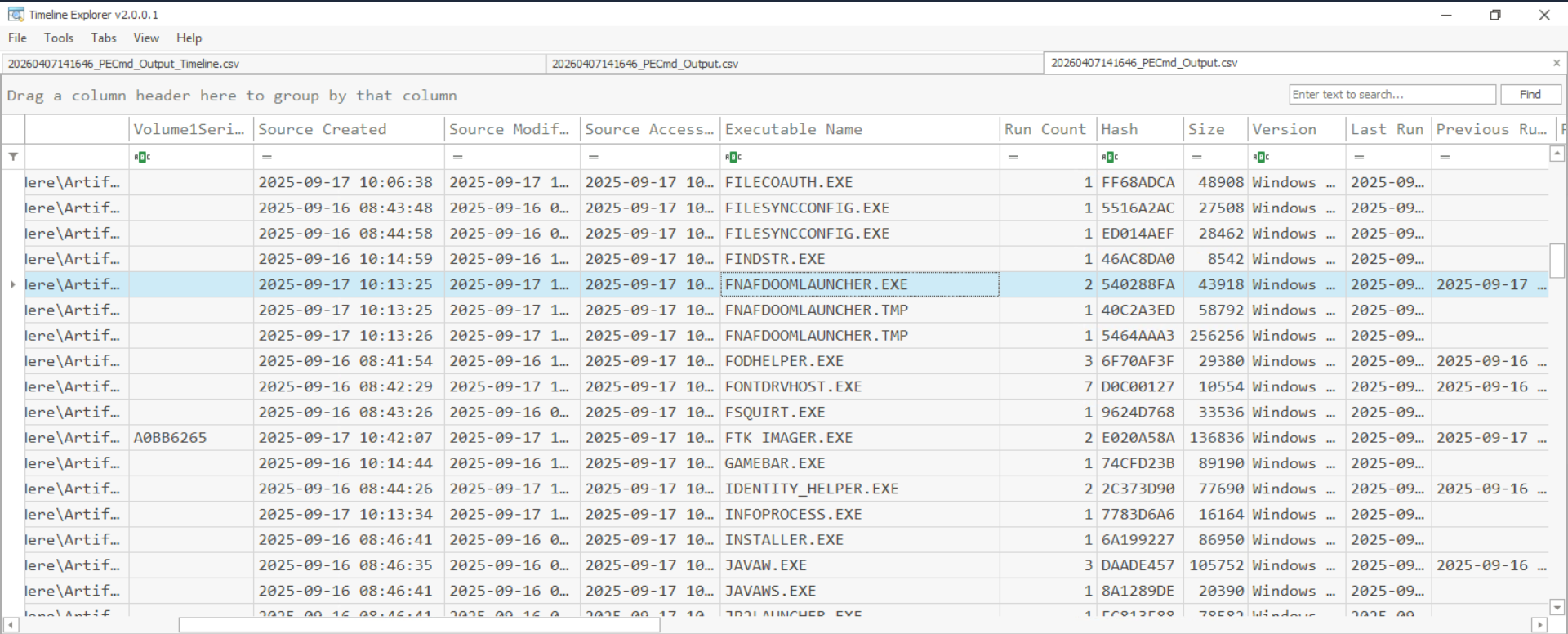
Parsing the Windows Prefetch directory using PECmd confirms the executable extracted from the archive was subsequently run by the user:
Answer Q1
What URL was used to download the malicious archive?
https://drive.usercontent.google.com/uc?id=1mIxhfZXmcUT2mbKNuahsRI4S_rzVUFKW&export=download
Answer Q2
What is the UTC timestamp of the archive download?
2025-09-17 10:10
Answer Q3
What is the name of the executable responsible for initiating the compromise?
Fnafdoomlauncher.exe
3. Phase 2: Execution — Silent Installer & Stage 2 Deployment (Questions 4–7)
Objective: Identify the installer flags, dropper hash, stage 2 path, and C2 UUID argument.
Sysmon Event ID 1 (Process Create) logs captured the full command line of the installer execution. The /VERYSILENT flag was passed to suppress all installer UI — no progress bar, no UAC prompt, nothing to alert the user that software was being installed in the background.
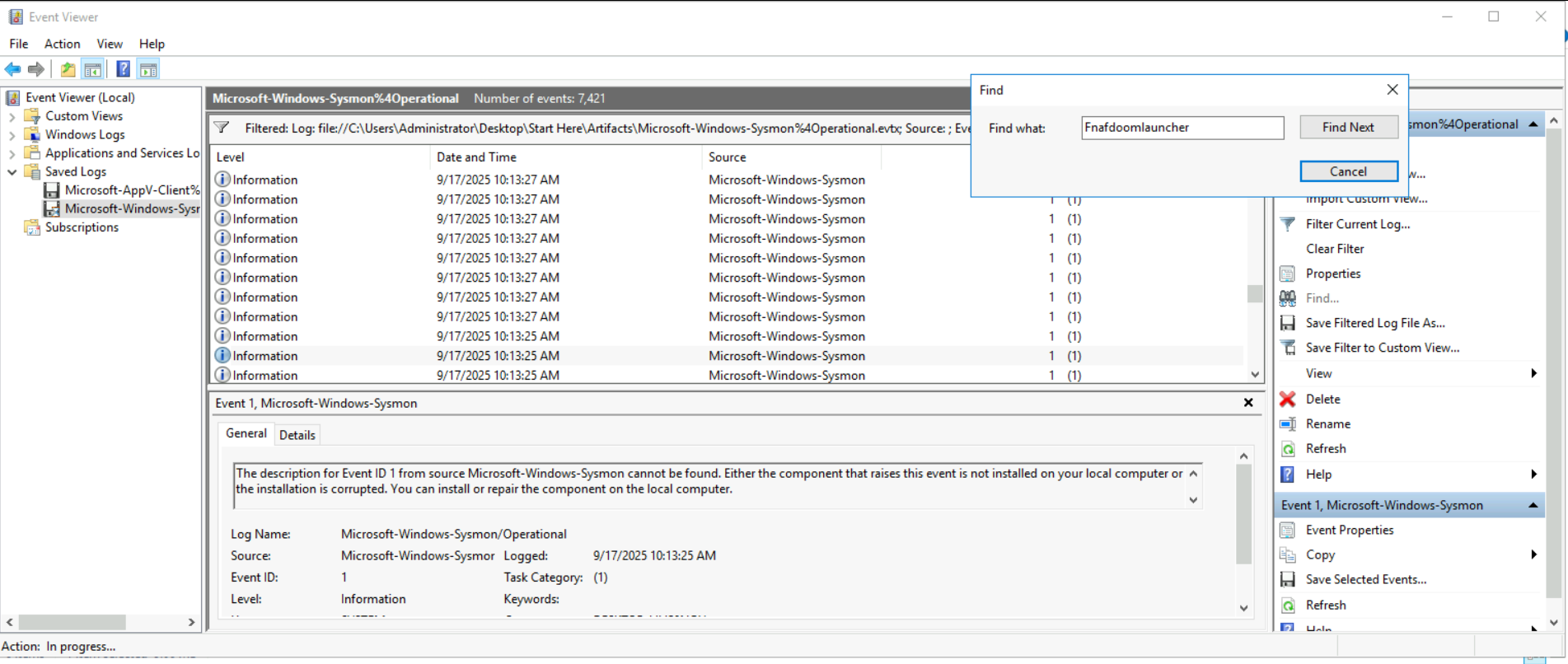
The installer then spawned a second process: updater.exe — a Node.js executable masquerading as a Windows system updater — executing from a hidden staging directory with a UUID passed as a command-line argument for C2 identification.
Analyst Note: The
/VERYSILENTflag in Sysmon Process Create logs is a high-fidelity indicator of malicious installer activity. Legitimate enterprise software installed via IT management tools (SCCM, Intune) does not typically use this flag for user-facing installs. Alert on this flag whenever the parent process is a user-downloaded executable.
Answer Q4
What installer flag was used to suppress user prompts?
/VERYSILENT
Answer Q5
What is the SHA-1 hash of the dropper binary?
FCB94C06FA80CE277B47E545B3805AB38BB6ACF4
Answer Q6
What is the full path of the stage 2 execution directory?
C:\Users\Levi\AppData\Local\Programs\Microsoft Updater\
Answer Q7
What UUID argument was passed to the stage 2 binary for C2 identification?
e90de8b2-eb79-4614-94f8-308f0f81573b
4. Phase 3: Persistence & Defense Evasion (Questions 8–10)
Objective: Identify the registry persistence entry, its creation timestamp, and the file hiding command.
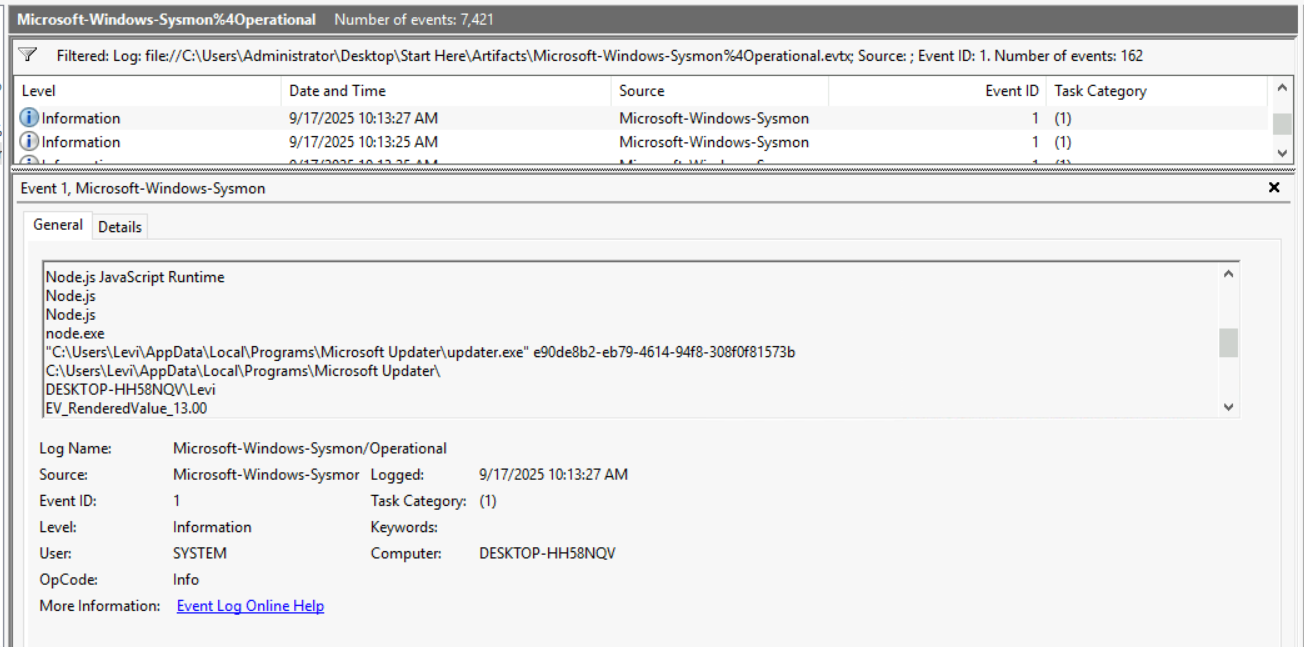
Sysmon Event ID 13 (Registry Value Set) captured the malware writing updater.exe to the Windows Run key — ensuring it executes automatically on every user login:
Immediately after establishing persistence, the malware spawned cmd.exe to execute attrib +h +s against the staging directory — setting the Hidden and System attributes to make the folder invisible in standard File Explorer views.
Answer Q8
What is the full path of the binary embedded in the persistence mechanism?
C:\Users\Levi\AppData\Local\Programs\Microsoft Updater\updater.exe
Answer Q9
What is the timestamp of the registry persistence entry creation?
2025-09-17 10:13:27
Answer Q10
What command was used to hide the staging directory?
attrib +h +s
5. Phase 4: Discovery — WMIC System Fingerprinting (Questions 11–16)
Objective: Identify the WMIC commands used to profile the victim system before exfiltration.
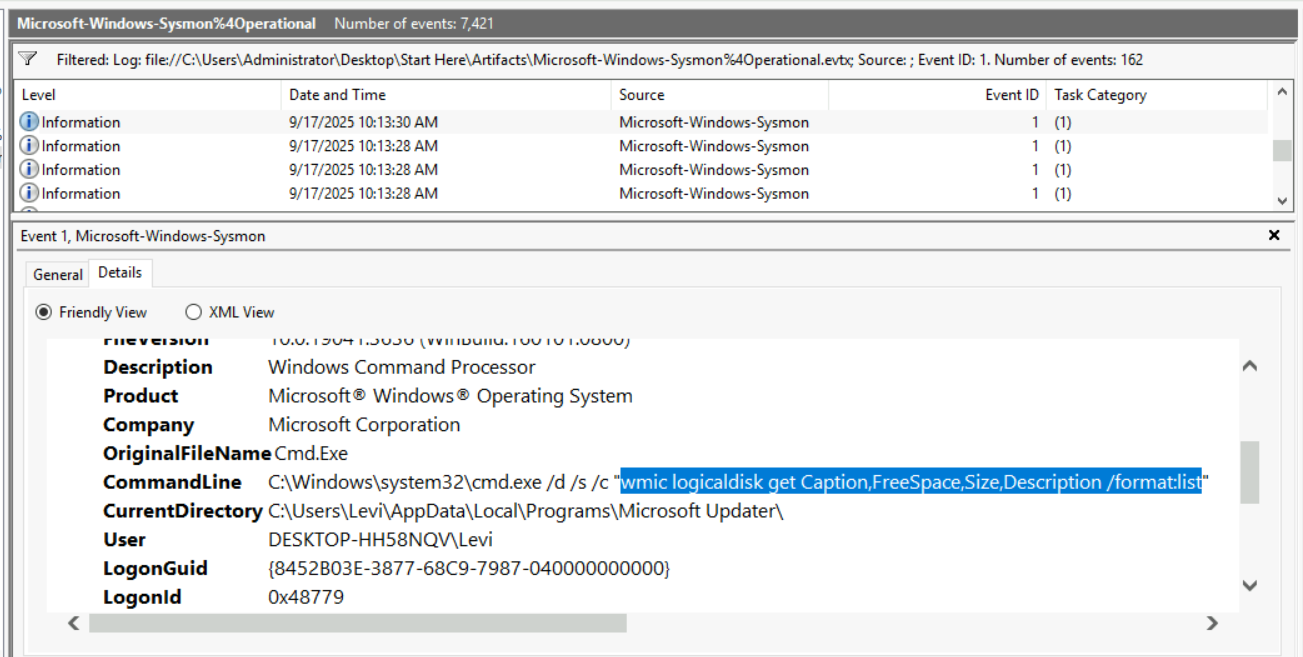
Sysmon Event ID 1 logs show wmic.exe being spawned five consecutive times in rapid succession — each with a different query argument. This is a textbook infostealer fingerprinting sequence:
| Query | Intelligence Gathered |
|---|---|
wmic os get Caption | OS name and version |
wmic cpu get Name | Processor model |
wmic path win32_VideoController get Name | GPU model |
wmic csproduct get UUID | Hardware machine GUID |
wmic logicaldisk get Caption,FreeSpace,Size,Description /format:list | Storage inventory |
Additionally, a PowerShell command read the Windows Product Key from the registry — a highly specific intelligence target that helps the attacker assess the value of the compromised system.
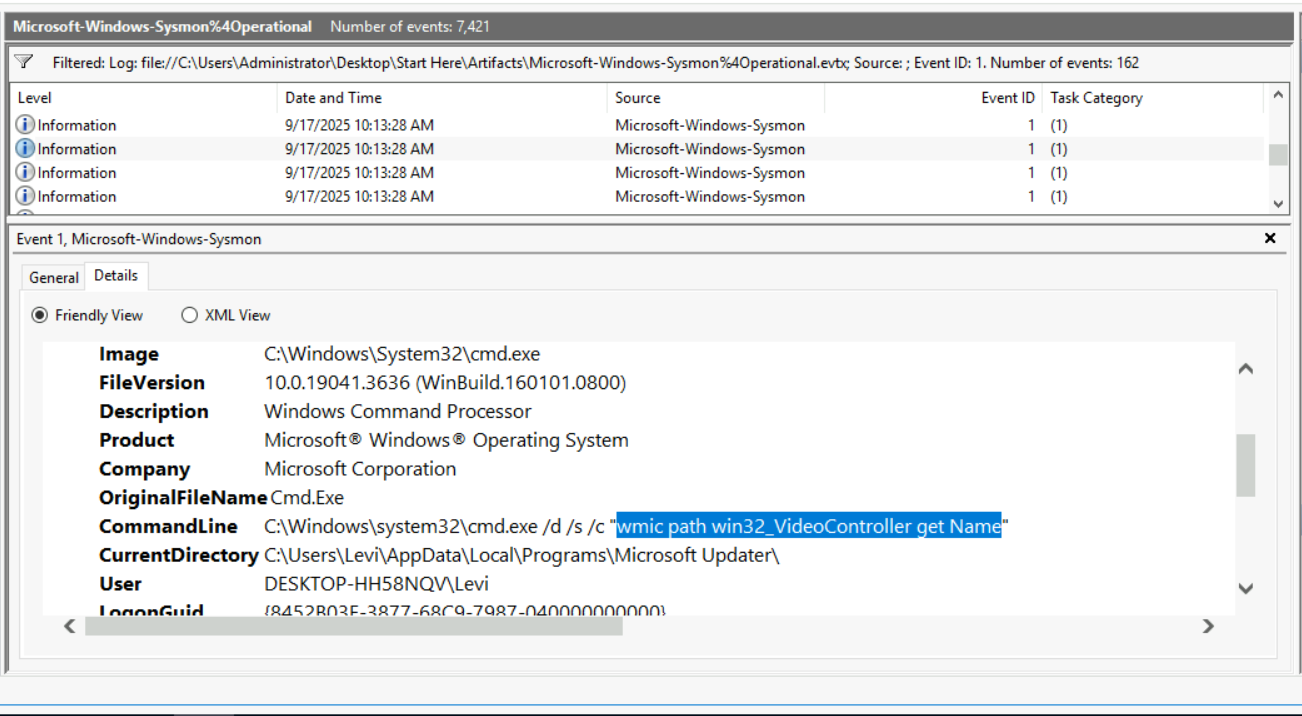
Answers Q11–Q16
Q11:
wmic os get CaptionQ12:wmic cpu get NameQ13:wmic path win32_VideoController get NameQ14:wmic csproduct get UUIDQ15:wmic logicaldisk get Caption,FreeSpace,Size,Description /format:listQ16 (Registry key for Product Key):HKLM\SOFTWARE\Microsoft\Windows NT\CurrentVersion\SoftwareProtectionPlatform\BackupProductKeyDefault
6. Phase 5: Credential Access — Browser Kill & IPC Theft (Questions 17 & 18)
Objective: Identify how the malware accessed Edge’s credential database and the IPC mechanism used for data transfer.
To access Microsoft Edge’s SQLite credential database (Login Data), the malware first force-killed all running Edge processes to release file locks:
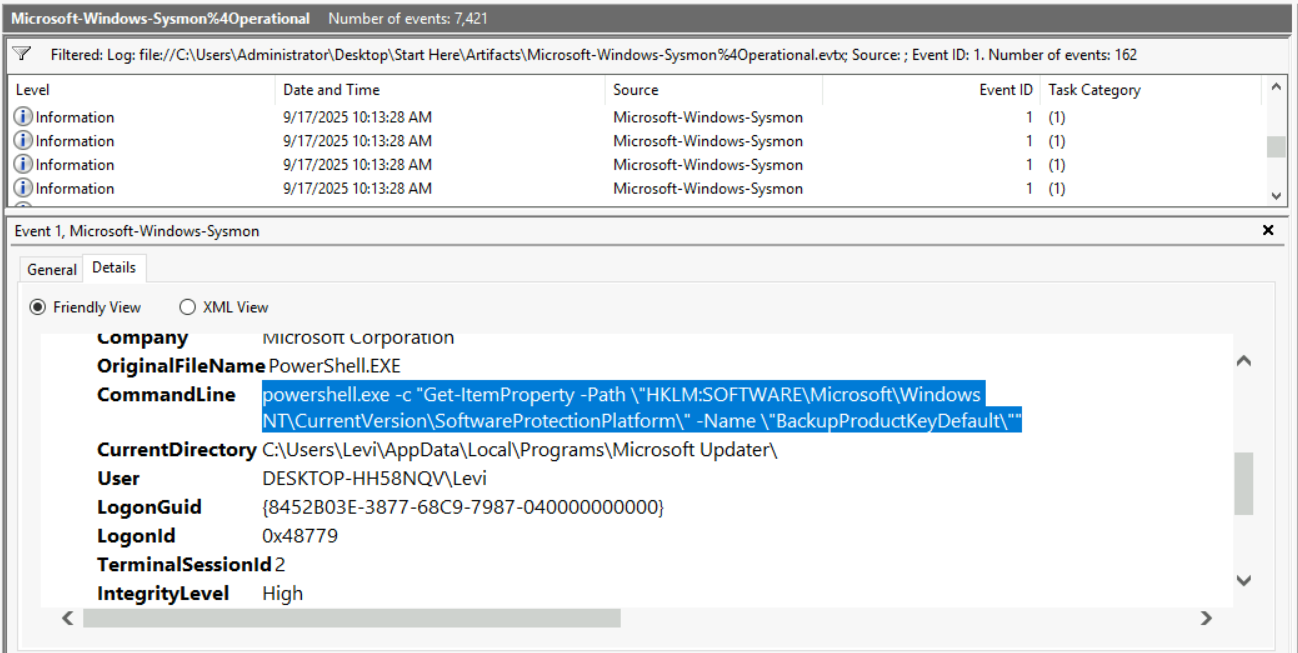
After killing the browser, Sysmon Event ID 17 (Pipe Created) captured the creation of a named pipe used to transfer the decrypted credentials between internal processes — keeping the stolen data entirely in memory and off disk:
Analyst Note: Named pipes with
ChromeDecryptIPCin their name are a known behavioral signature of browser credential stealers. This pattern should be added to your EDR hunting queries. Sysmon Event ID 17 (Pipe Created) must be enabled in your Sysmon configuration to capture this evidence.
Answer Q17
What command was used to force-terminate the browser?
taskkill /F /IM msedge.exe
Answer Q18
What named pipe was created for credential transfer?
ChromeDecryptIPC_e7e223c5-50d5-40ae-8513-64c9962789c2
7. Phase 6: Command & Control — Geolocation + Cloudflare Proxy (Questions 19–21)
Objective: Identify the geolocation API, its IP, and the C2 domain’s resolved IPs.
Sysmon Event ID 22 (DNS Query) logs captured the malware’s outbound DNS queries in sequence. The pattern is consistent: first call the geolocation API to profile the victim, then beacon to the C2 domain.
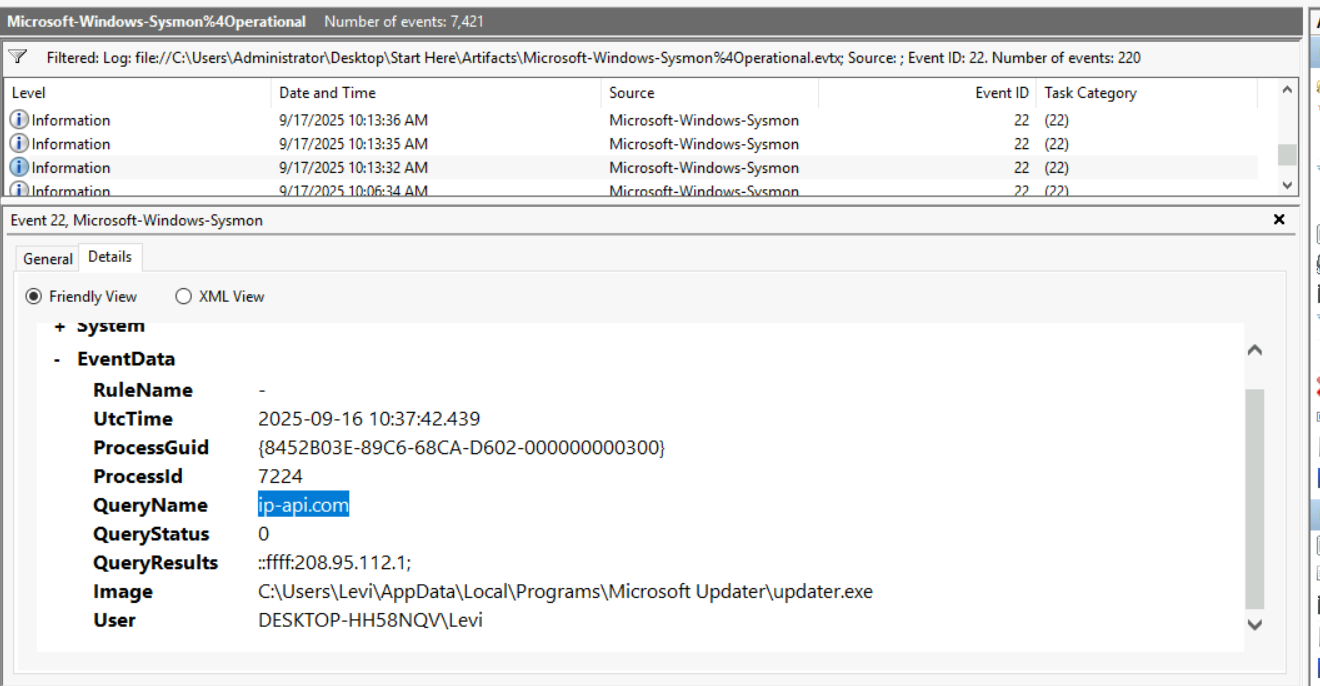
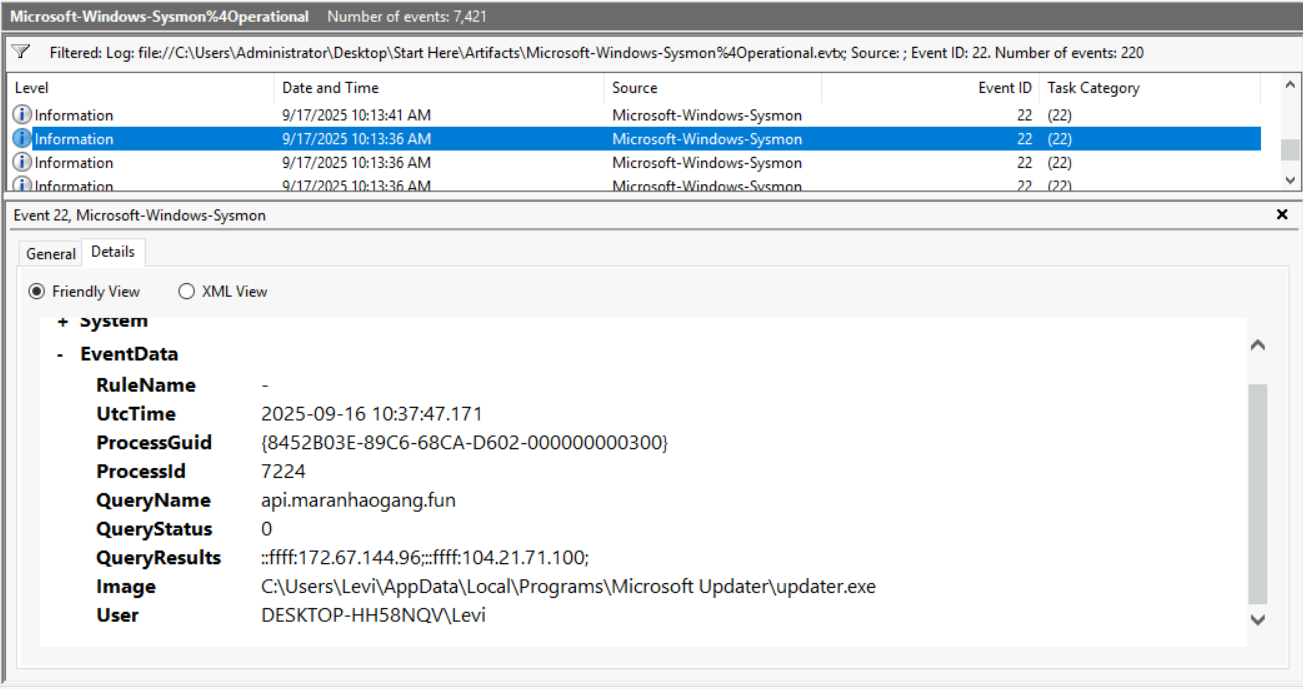
The C2 domain api.maranhaogang.fun resolves to Cloudflare edge nodes rather than the attacker’s actual server. This deliberate architecture makes attribution difficult, prevents IP-based blocking (blocking Cloudflare IPs would break legitimate sites), and provides resilience against takedowns.
Analyst Note: Cloudflare-proxied C2 infrastructure requires domain-based blocking rather than IP-based blocking. Add
api.maranhaogang.funto DNS sinkholes and web proxy blocklists. Blocking the Cloudflare IPs directly would cause significant collateral damage to legitimate traffic.
Answer Q19
What geolocation API did the malware query?
ip-api.com
Answer Q20
What is the IP address of the geolocation API?
208.95.112.1
Answer Q21
What are the two C2 IP addresses resolved via DNS?
172.67.144.96, 104.21.71.100
8. Conclusion
The Maranhão investigation traces a complete infostealer infection from a game mod download to domain credential theft. Key findings:
- Delivery: Trojanized game mod (
Fnafdoomlauncher.exe) downloaded from Google Drive, hosted to bypass URL reputation filters. - Execution: Inno Setup installer with
/VERYSILENTflag deployedupdater.exe(Node.js stealer) to a hidden AppData directory. - Persistence: Registry Run key set at
10:13:27 UTC— 3 minutes after execution. Directory hidden viaattrib +h +s. - Fingerprinting: Five WMIC queries + Windows Product Key theft performed for full system profiling.
- Credential Theft: Edge killed via
taskkill, credentials exfiltrated viaChromeDecryptIPCnamed pipe. - C2: Cloudflare-proxied
api.maranhaogang.funwith prior geolocation profiling viaip-api.com.
Key Takeaways for the SOC:
- Game mods are a persistent supply-chain threat. Employees downloading software from unofficial sources bypass enterprise procurement security. Application allowlisting is the only reliable control.
/VERYSILENTis a red flag in Sysmon logs. Legitimate enterprise installers used by IT management tools do not typically suppress all UI. Automate an alert on this flag when the parent process is a user-initiated download.- Named pipes for credential IPC are a hunting target. Add
ChromeDecryptIPC*to your Sysmon Event ID 17 hunt queries — this is a cross-vendor browser stealer signature. - Cloudflare-proxied C2 = Domain-based blocking required. Never attempt to block Cloudflare IPs. Maintain domain-level IOC blocking at your DNS resolver and web proxy.
Analysis Date: April 7, 2026 Analyst: El OMARI Zakaria